

Aztec Clusters by BGaming: Cluster Wins Mechanics and Their Influence on RTP
Aztec Clusters by BGaming stands out as a modern slot built around cluster wins rather than traditional paylines. This design choice changes how payouts are formed, how volatility is perceived, and how the return to player (RTP) behaves over time. Understanding these mechanics helps players evaluate risk, session dynamics, and the realistic expectations of the game in 2026.
How Cluster Wins Work in Aztec Clusters
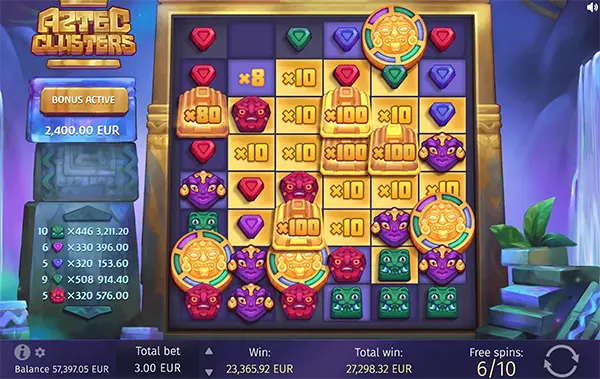
Cluster wins replace paylines with adjacent symbol connections. In Aztec Clusters, a win is triggered when a group of identical symbols forms next to each other horizontally or vertically. Diagonal connections usually do not count, which means positioning on the grid is crucial for outcomes.
The grid structure in this title allows multiple clusters to form in a single spin. When one cluster is removed after a win, the remaining symbols fall down, and new ones enter from above. This cascading effect creates additional chances for consecutive wins without placing another bet.
From a gameplay perspective, cluster wins introduce a more dynamic rhythm compared to fixed paylines. Instead of relying on predefined lines, the player experiences a more fluid system where wins depend on symbol density and placement rather than strict patterns.
Key Differences from Traditional Payline Slots
In classic slots, outcomes depend on paylines crossing reels in specific combinations. Aztec Clusters removes this constraint, meaning players are not limited by line directions or bet adjustments tied to paylines.
The absence of paylines simplifies betting but increases reliance on probability distribution across the grid. This shifts the player’s focus from line optimisation to understanding symbol frequency and cluster formation likelihood.
Another important distinction is the role of cascades. Traditional slots resolve outcomes in a single step, whereas cluster-based games extend each spin through multiple cascading sequences, affecting both perceived volatility and payout pacing.
The Relationship Between Cluster Wins and RTP
Return to player (RTP) in Aztec Clusters is calculated over a long-term cycle of spins, typically expressed as a percentage close to industry standards (often around 96%, depending on configuration). However, cluster wins influence how this RTP is distributed rather than the value itself.
Because of cascading mechanics, a single spin can contribute multiple outcomes to the RTP calculation. This creates a perception of more frequent engagement, even if the overall return remains mathematically fixed.
Cluster-based slots often feel more volatile in short sessions. This is due to the uneven distribution of wins, where extended dry spells can be followed by rapid sequences of cascading payouts that significantly impact the total return.
Why RTP Feels Different in Cluster-Based Games
Players often interpret RTP through short-term experience, but cluster mechanics stretch the impact of individual spins. A single successful spin can include several cascades, making wins appear more substantial than in standard formats.
At the same time, the lack of frequent small line wins may create longer losing streaks. This contrast between quiet periods and sudden activity is a defining feature of how RTP is experienced rather than calculated.
In practical terms, RTP remains a statistical average over thousands of spins. Cluster wins do not increase RTP, but they reshape how and when returns are delivered during gameplay sessions.
Volatility and Player Strategy Considerations
Aztec Clusters leans towards medium to high volatility due to its reliance on cascades and cluster formation. Wins are less predictable, and their size can vary significantly depending on how many cascades occur in sequence.
For players, this means bankroll management becomes more important than in low-volatility slots. Longer sessions may be required to approach the theoretical RTP, especially when dealing with extended non-winning periods.
It is also worth noting that cluster wins do not allow for strategic influence over outcomes. The system is entirely random, and no betting pattern can alter the probability of cluster formation or cascade frequency.
Practical Approach to Playing Aztec Clusters
A balanced session strategy involves setting clear limits before starting. Because cluster wins can produce sudden swings, both gains and losses may occur faster than expected.
Observing the game’s rhythm can help set realistic expectations. Players should recognise that long sequences without wins are part of the design and not an indicator of future results.
Ultimately, Aztec Clusters is built around entertainment value combined with mathematical fairness. Understanding how cluster wins interact with RTP provides a clearer picture of what the game offers and helps avoid common misconceptions about payout behaviour.